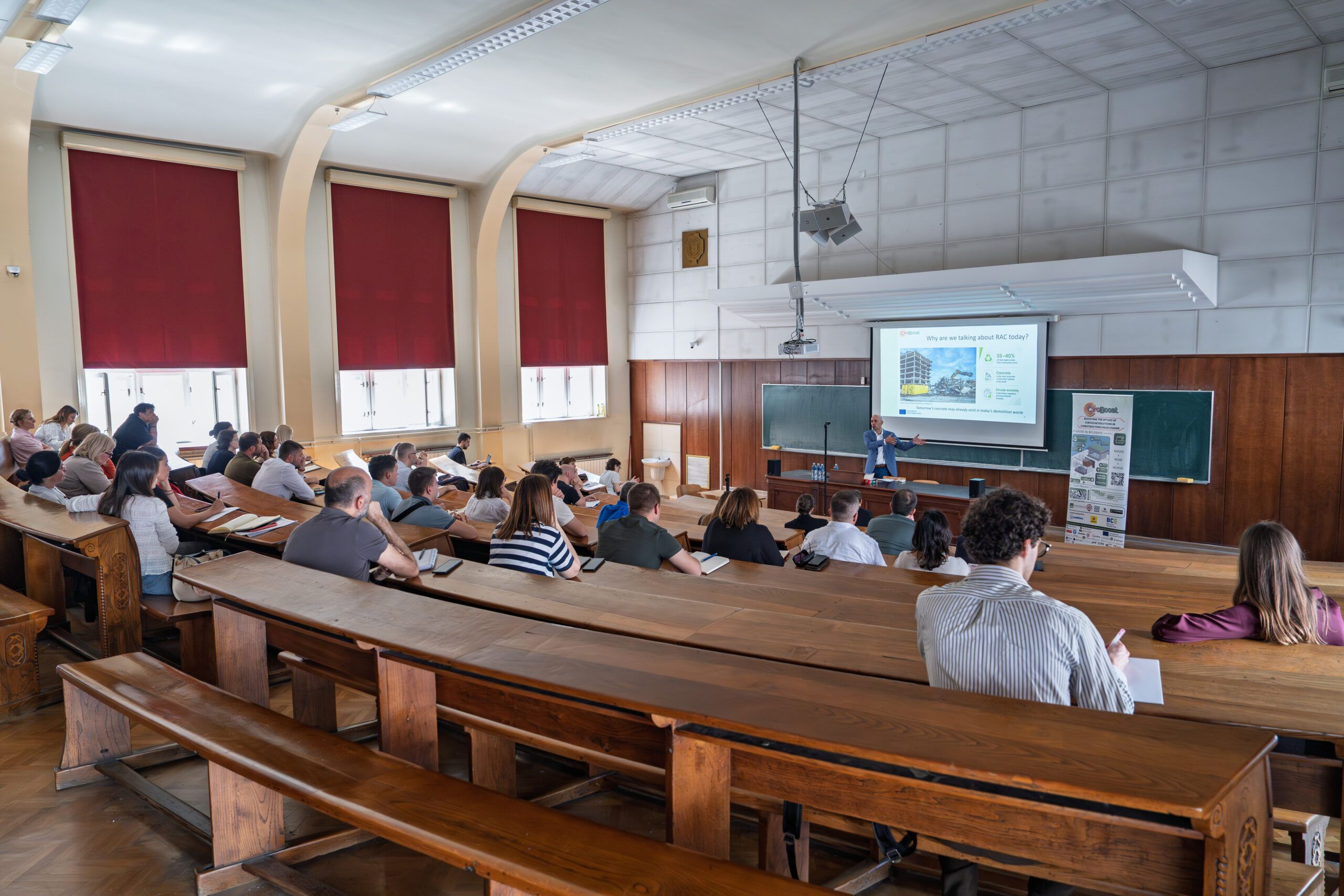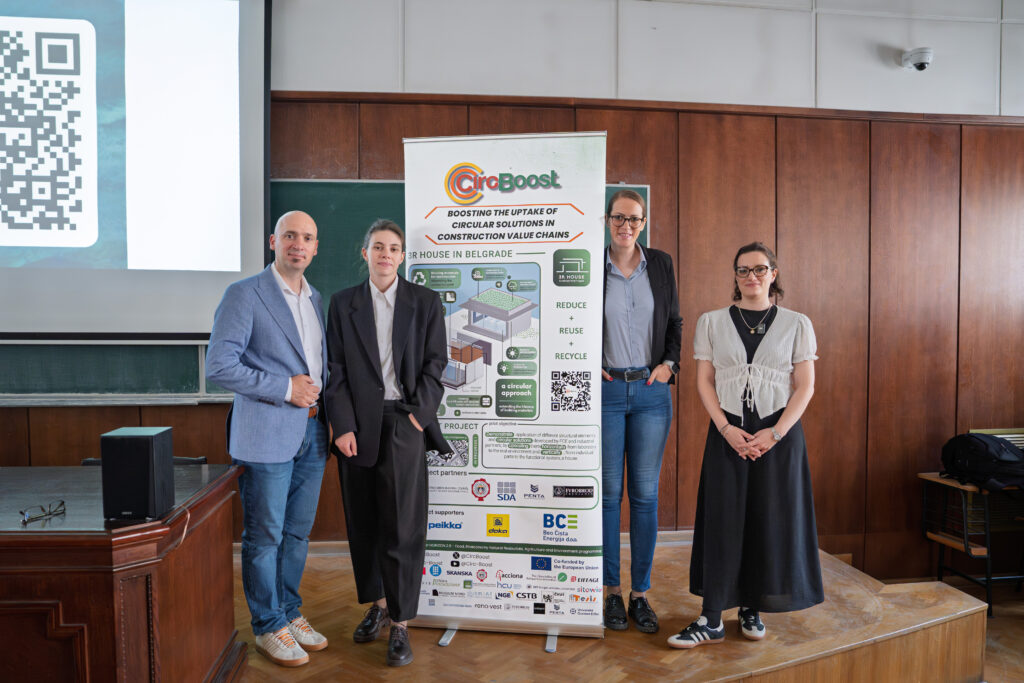
On 22 May 2026, the University of Belgrade, Faculty of Civil Engineering hosted Circ-Boost Training #4, dedicated to the practical application of recycled aggregate in structural concrete and its role in advancing circular construction practices.
The training, titled “Practical application of recycled aggregate in structural concrete: a Serbian perspective”, brought together researchers, engineers, and students to discuss the regulatory, technical, and practical aspects of concrete recycling and the use of recycled aggregate in structural applications.
From waste to resource: regulatory framework and standards
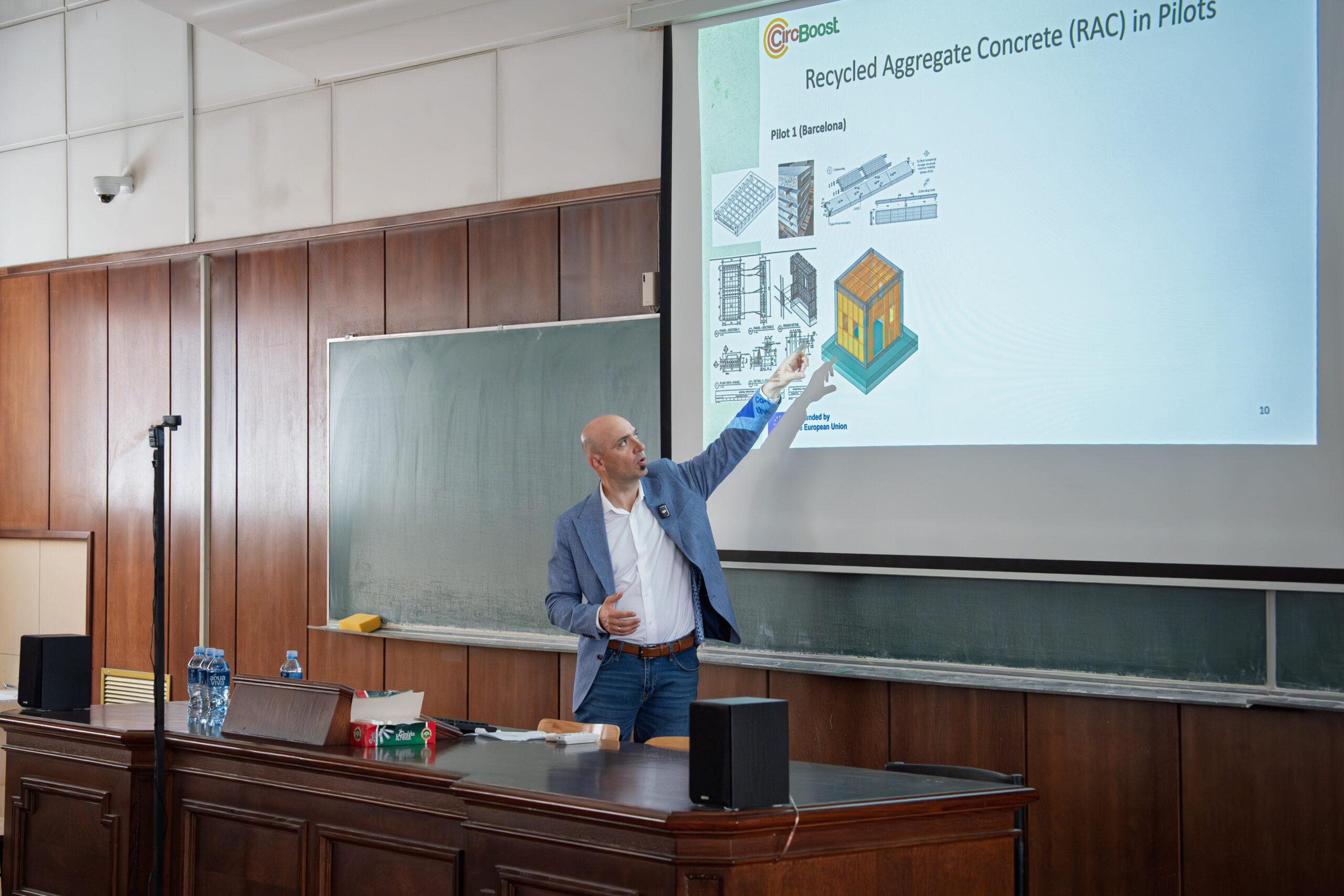
The first lecture was delivered by Assoc. Prof. Ivan Ignjatović (UBFCE), who presented “From waste to resource: regulatory framework, standards, and the road ahead for concrete recycling.”
The presentation provided an overview of the current regulatory framework and standards related to demolition activities, construction waste management, recycled aggregate production, and concrete manufacturing using recycled materials. Participants were also introduced to Serbia’s existing legal framework for waste management and examples of good practice from across Europe.
Particular attention was given to the opportunities and limitations of using recycled aggregate in concrete, viewed through the lens of relevant regulations and technical standards.
Recycled aggregate concrete in practice
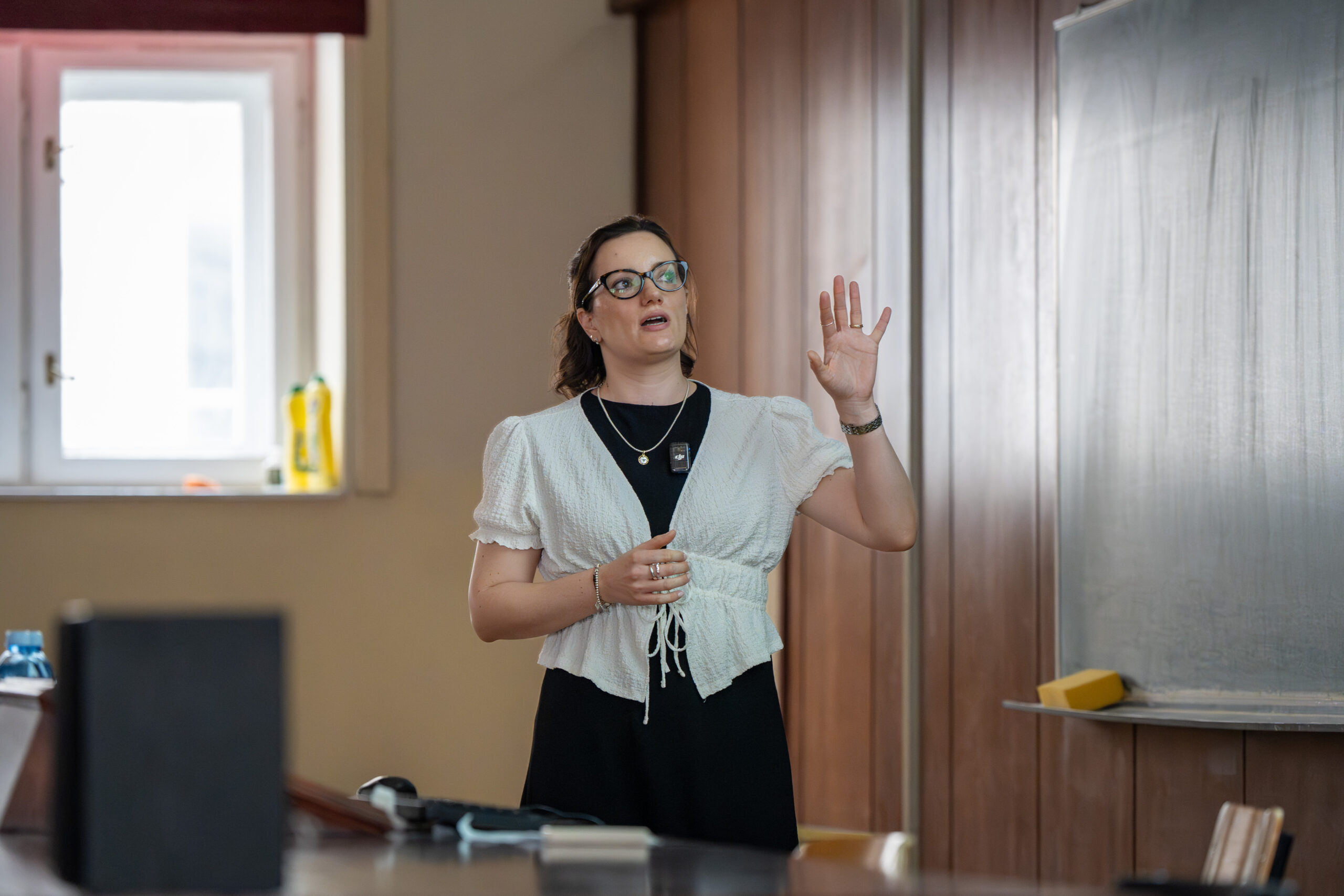
The second lecture, delivered by Asst. Prof. Jelena Carević (UBFCE), focused on “Recycled aggregate concrete in practice: mix design, challenges, lessons learnt and European experience.”
The presentation covered the principles of designing concrete mixtures with coarse recycled aggregate, current standards for recycled aggregate concrete, and the results of experimental research conducted within Circ-Boost Pilot 3.
Participants also gained insight into the industrial production of recycled aggregate concrete at Penta Ge.Co., as well as the design and construction of foundations, columns, and walls for the Serbian 3R Pilot House, where 100% of natural coarse aggregate was replaced with recycled aggregate.
In addition, examples from contemporary European practice demonstrated how recycled aggregate is increasingly being incorporated into structural concrete applications across the construction sector.
Advancing circular construction through practice
By combining regulatory perspectives, scientific research, and practical implementation examples, the training highlighted the significant potential of recycled aggregate concrete to support the transition towards a more circular and resource-efficient construction industry.
The event forms part of the ongoing activities of Circ-Boost Pilot 3, which is developing and demonstrating innovative circular solutions for the built environment.